Orangery vs Greenhouse: The Key Differences Explained
Search online for a new garden structure and two words start turning up together: orangery and greenhouse. In photographs they can look almost identical, plenty of glass, an aluminium frame, a sunny spot in the garden. The two are built for different jobs though, and picking the wrong one can leave you short of growing space, or short of the room to actually sit and enjoy your garden.


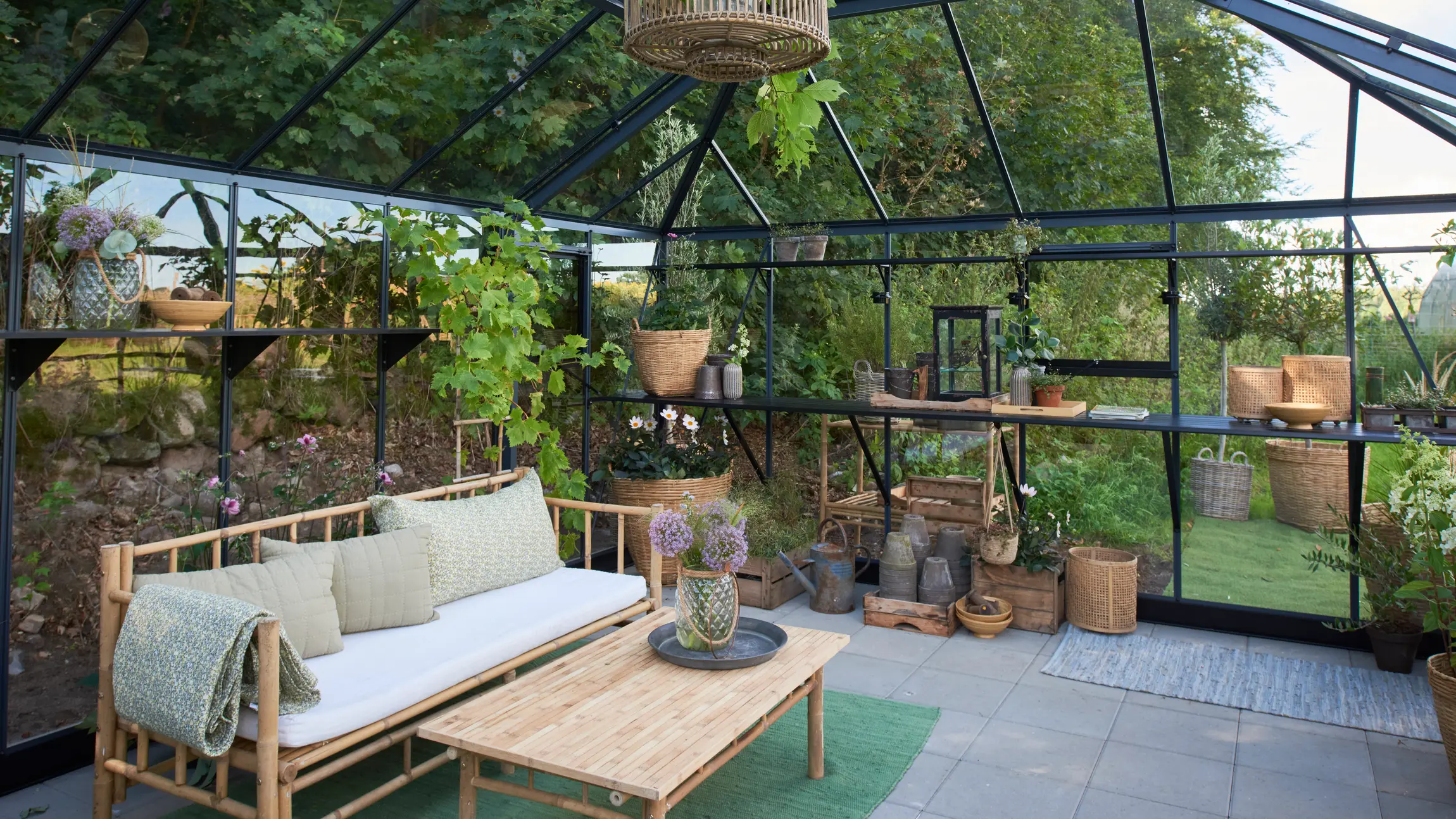
An orangery is built from the outset with space for people as well as plants.
What Is an Orangery?
An orangery, in the way greenhouse makers use the term today, is a freestanding greenhouse with more headroom and floor space than a standard model, made to work as a garden room as well as a place to grow plants. That distinction matters, because the word has an older meaning that causes most of the confusion: a solid-walled extension to the house with a lantern roof, once used to shelter citrus trees over the colder months.
Halls Greenhouses uses orangery in this newer, garden-based sense. These structures are made from glass and aluminium profiles in the same way as a traditional greenhouse, and they stand apart from the house rather than attached to it. The result looks like a larger, airier greenhouse rather than a smaller version of a house extension.
The distinction is worth knowing before you start comparing options, because it changes what you are actually looking at. A house-extension orangery is a building project tied to the structure of the home. A garden orangery greenhouse is a freestanding purchase, sited wherever the garden allows rather than built onto the house.
Orangery vs Greenhouse: What Actually Sets Them Apart
The real difference comes down to purpose rather than materials. A traditional greenhouse is built around plants first, with the layout, staging and ventilation aimed at growing conditions. An orangery gives you more room to grow plants and still have space to sit, work or spend time outdoors.
Within the Halls Greenhouses range, this shows up clearly. Halls Popular and Halls Magnum are compact, growing-focused greenhouses, with a layout suited to staging, seed trays and everyday plant care. The Halls Garden Room and Halls Qube Square, by contrast, are orangery-style structures with more height and a more open layout, roomy enough for more than growing.
The practical difference is how much floor space ends up given over to plants. In a traditional greenhouse, most of the floor holds staging and growing beds. In an orangery, some of that space is often given over to seating or a working area, so the growing area, while still capable of the same range of plants, tends to be smaller relative to the overall size of the structure.
The extra height in an orangery changes the growing experience too. Taller plants and hanging displays have more room to develop, and the greater volume of air inside can help even out sudden temperature swings on a sunny day. That does not remove the need for ventilation and shading, but it can give you a little more margin while you get used to how the space behaves through the seasons.
Common Mistakes to Avoid
A few assumptions come up again and again when gardeners compare the two.
The first is expecting an orangery greenhouse to behave like a heated house extension. It is not insulated to residential standards by default. Comfort depends on the same things a greenhouse relies on: ventilation, shading and, if you want it, additional heating.
The second is assuming a greenhouse and an orangery are different sizes of the same product. Size is part of the picture, but layout and intended use matter more. A larger greenhouse used purely for growing is still a greenhouse. An orangery is built from the outset with space for people as well as plants.
A third, smaller mistake is ruling out an orangery because the growing side seems secondary. The glass roof and walls that make the space bright and comfortable to sit in are the same features that make it capable of raising tomatoes, herbs or citrus, so the two uses sit alongside each other rather than competing.
Choosing Between an Orangery and a Traditional Greenhouse
Once the terminology is clear, the actual decision is more straightforward than it first appears. It comes down to how you plan to use the space day to day, rather than which word sounds more appealing.
If plants are the priority, cucumbers, tomatoes and seed propagation among them, a traditional greenhouse such as Halls Popular or Halls Magnum keeps the whole footprint working for growing.
If you want somewhere to sit with your plants, or to use the space beyond the growing season, an orangery-style structure such as the Halls Garden Room gives you the extra headroom and floor space for that.
If neither extreme fits, the Halls Atrium offers a growing space with more of a garden-room feel, without moving to the scale of a full orangery.
Frequently Asked Questions
Is an orangery just a bigger greenhouse?
Not exactly. Size is part of it, but the real distinction is purpose. An orangery is built to work as a garden room as well as a growing space, while a traditional greenhouse is built primarily around plants. Many orangeries do have more headroom and floor space than a standard greenhouse, but that space is there for living as well as growing.
What is the difference between an orangery and a conservatory?
A conservatory is typically built onto the house as an extension, sharing a wall or roofline with the existing building. An orangery greenhouse, as sold by Halls Greenhouses, is a freestanding structure that stands apart from the house in the garden, closer to a substantial greenhouse than an added room.
Can you grow the same plants in an orangery as in a traditional greenhouse?
Yes. Both structures let in light through glass roofs and walls, so plants that need bright, sheltered conditions, including tomatoes, herbs and many tender or exotic varieties, tend to do well in either. The main difference is how much of the floor space is given over to growing rather than seating or general use.
Do you need planning permission for a garden orangery?
This varies by property and location, so it cannot be confirmed in general terms here. Check with your local planning authority before ordering to find out what applies to your garden.
Ready to Grow?
Whichever structure suits your garden, matching it to how you actually plan to use the space is worth getting right first. Compare the full range of orangery and traditional greenhouse models from Halls Greenhouses to see which fits your plot.


Transform Your Greenhouse Life
Are you looking for fresh inspiration to transform your greenhouse life into a lush paradise? Let's explore new ideas and tips together that will make your green haven even more magical!


JULIANA GROUP
Juliana Group is a leading global supplier of quality residential greenhouses. Founded in 1963 by Mogens A. Stærmose in Odense, Denmark, the family-owned company is today owned by the third generation, Nikolaj Stærmose. The headquarters remains Odense-based with subsidiaries in the UK and Germany and exports to more than 20 countries.
’We help people grow’. That is why our brands Halls, and Juliana set the frame for experiences that are as natural as they are magical. Despite our long history, we’re future-focused and curious about how we can improve the sustainability of our greenhouses. Learn more about Juliana and find inspiration for life in the greenhouse in our inspirational universe.


